
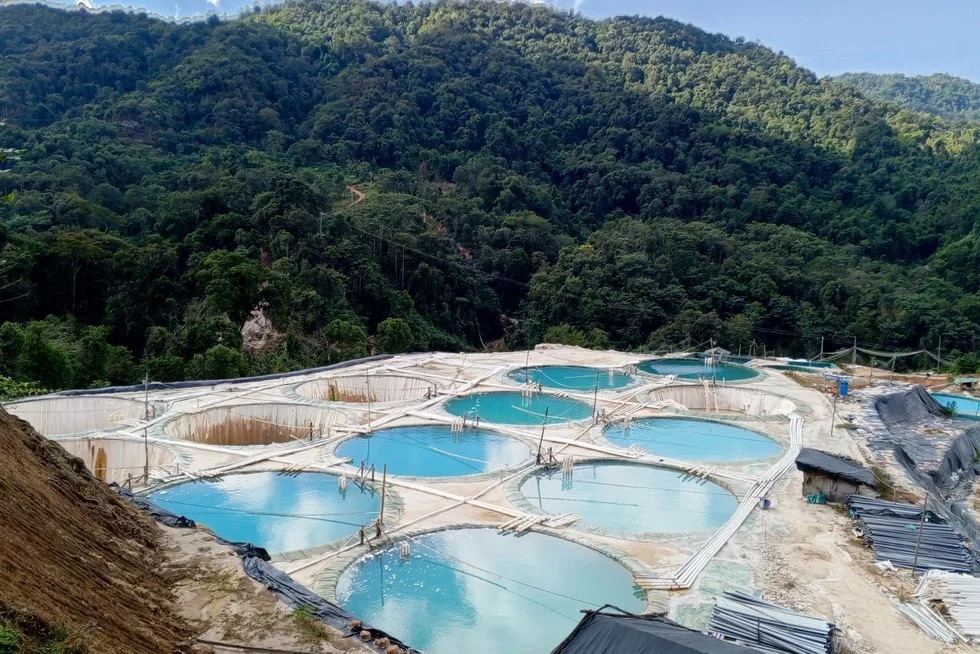
A policy brief from EarthRights International brings to light the impact of environmental destruction and human rights violations resulting from the mining of heavy rare earth elements (HREEs) in Kachin State, Myanmar.
Two key HREEs, dysprosium and terbium are main constituents needed to produce NdFeB magnets which are used in a variety of renewable energy technologies like wind turbines as well as electric vehicles, amongst other products.
According to EarthRights International, 60% of these elements comes from mining activities in Kachin.
Demand for NdFeB magnets has accelerated over recent years due to an increased need in the electronics industry, and more so in renewable energy.
Between 2020 and 2030, demand for these magnets is forecast to increase by 225% and then expected to double again by 2050.
Extracting these elements is highly polluting and not only damages natural landscapes leading to ecological degradation, poisoned waterways, deforestation, and soil contamination, but also leads to the persecution of indigenous communities by the militia that run illegal mining activities.
Kachin Special Region 1 is a semi-autonomous territory run by militias that are affiliated with Myanmar’s military regime.
One of the mining companies in the region, Sin Kyaing Company, which is owned by local militia leader Lagwi Bawm Lang, Global Witness claims is a front for illegal investment by Chinese businesspeople.
Miners head south
Since the 1980s, China’s mining industry boomed but crackdowns began when many illegal mining activities were found to be occurring, and concerns for the environment and shrinking resources led to a cleaning up of the industry.
From 2016, the central government shut down many of the rare earth element mines in Ganzhou, Jiangxi Province.
Rare earth element processors then moved to Myanmar where deposits similar to those in Jiangxi were found.
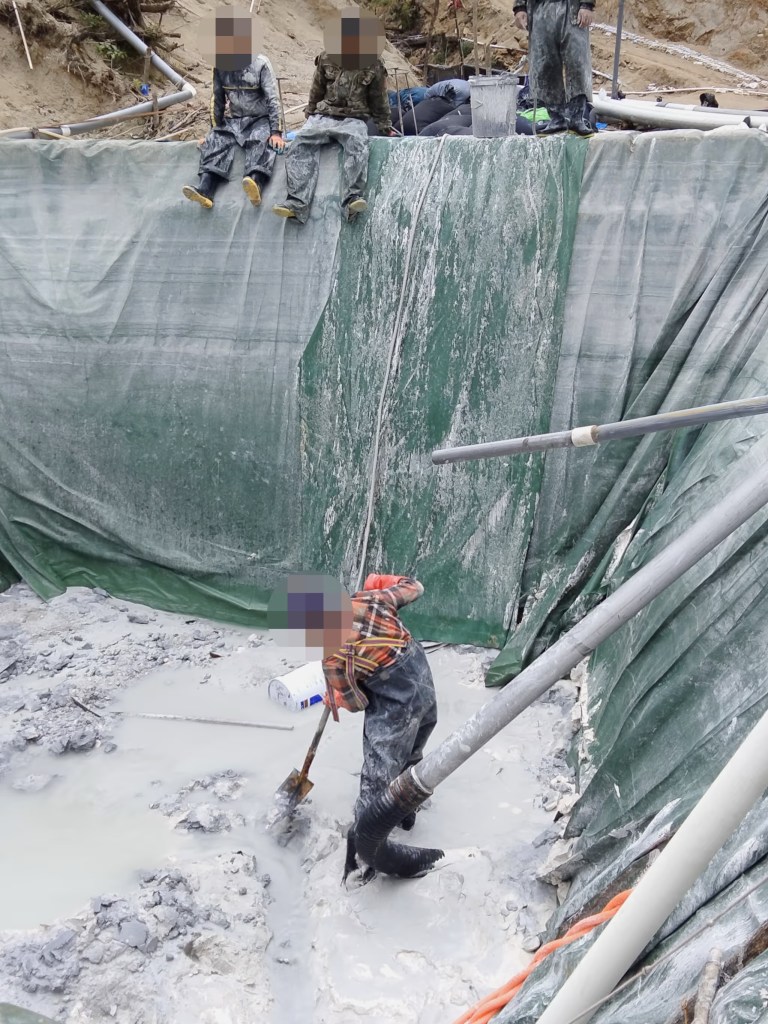
Furthermore, Global Witness claims that revenues from rare earth mining in Myanmar are being used to fund the military’s abuses against civilians.
It revealed that multiple sources said that ‘Chinese workers hold the skilled roles, while Burmese workers, including children, do most of the manual labour.’
Much of the manual labour comes with significant risks for workers, including persecution from militant forces.
Destruction in extraction
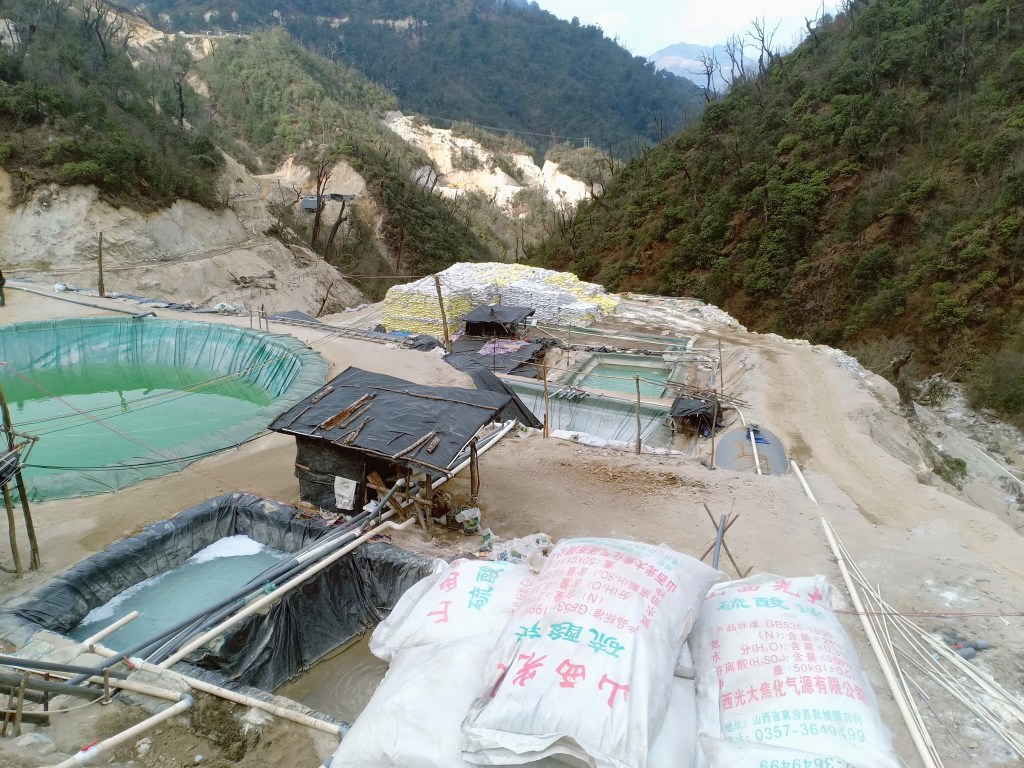
Further, the extraction of the HREEs involves injecting ammonium sulfate into the hillside of a site through a network of pipes, which carries a number of risks for the surrounding environment.
This solution separates the rare earth elements from the surrounding rock, and this process releases heavy metals and ionic compounds as well as radioactive material into surrounding soil and waterways. This often has an impact for years after an extraction site is closed.
EarthRights International and Kachin-based environmental conservation group BRIDGE collected water samples in the region which showed that leachate from one mining site out of use for 10 years was still emitting heavy metals including arsenic and cadmium.
It’s well documented that these toxins cause health problems for the people living near the extraction pools, and destroy local ecosystems, yet multiple multi-national companies still rely on mining activities from Kachin.
‘Multinational corporations responsible for global demand for these [NdFeB] magnets are inextricably linked to dozens of leaching pools at mining sites across Kachin,’ said Ben Hardman, Mekong Legal Director for EarthRights International.
‘Corporations should be consulting with Kachin civil society groups and local governance actors on how to help remedy the environmental disaster they’ve helped to create.’
Once the rare earth elements are mined in Kachin, they are exported to China, and there, the industry is controlled by five state-owned companies.
The largest is China Southern Rare Earth Group which owns more than 40% of officially sanctioned mining share.
Once the HREEs are processed by one of China’s state-owned processing companies, they are passed to permanent magnet manufactures, with one of the largest in the country being JL Mag Rare-Earth Company which sources some of its heavy rare earth elements from China Southern Rare Earth Group.
JL Mag Rare-Earth Company is a supplier to some of the world’s best known manufacturers of wind turbines, electronics, and electric vehicles, including Goldwind Technologies, General Motors, Volkswagen, Tesla, Bosch, Mitsubishi, and others.
‘If rare earth mining comes to this area, there will be no future for our people’
A local Kachin resident who is trying to stop the expansion of HREE mining into his village
 Equinox News
Leave a comment