
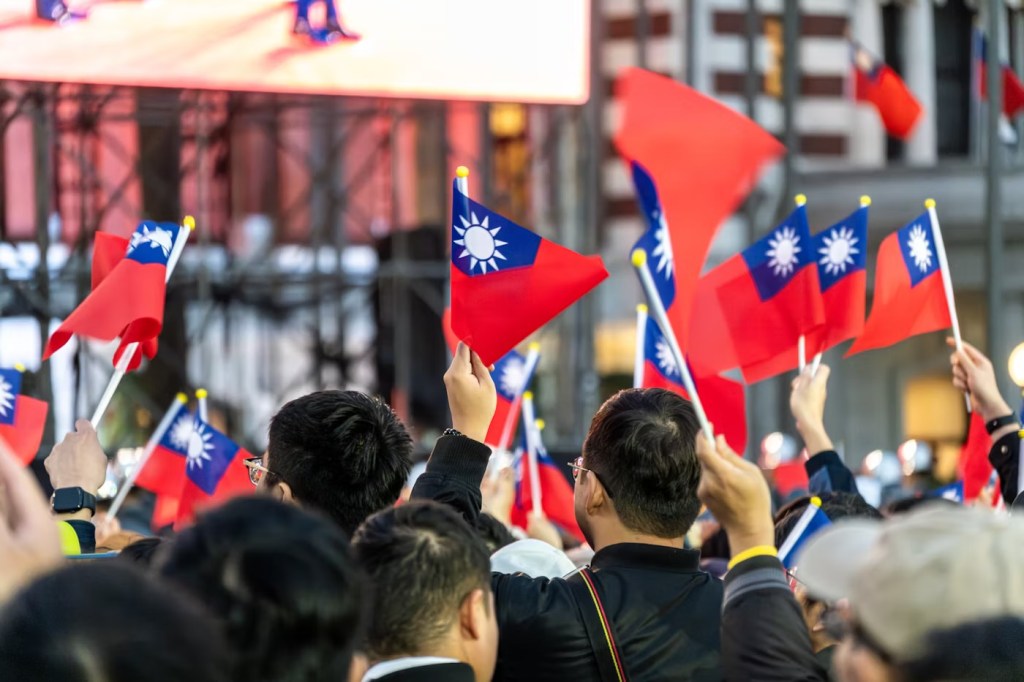
Officially known as the Republic of China, Taiwan is an island separated from the mainland of China by the Taiwan Strait and has been independently governed by ROC since 1949.
Relations between mainland China and Taiwan have since then been fraught with tension, as China asserts that any recognition of Taiwan as a separate state undermines its territorial integrity.
Taiwan’s history with China has been marked by ongoing conflict and military threats.
In December 1949, the ROC government was officially established in Taiwan, followed by 1.2 million people who relocated from China. This was shortly after a civil war between the Kuomintang-led ROC government and the Chinese Communist Party which ended a few months prior.
On 27th October 1949, the Battle of Kuningtou on Kinmen, Taiwan saw ROC armed forces defeat the People’s Liberation Army, the military arm of the CCP. Shortly after, martial law was declared in Taiwan, continuing until 1987.
When martial law was ended, so too were the bans on the formation of new political parties, and cross-strait people-to-people exchanges began.
Later in 1996, the ROC held its first direct presidential election, with Kuomintang’s Lee Teng-hui gaining more than 50% of the vote.
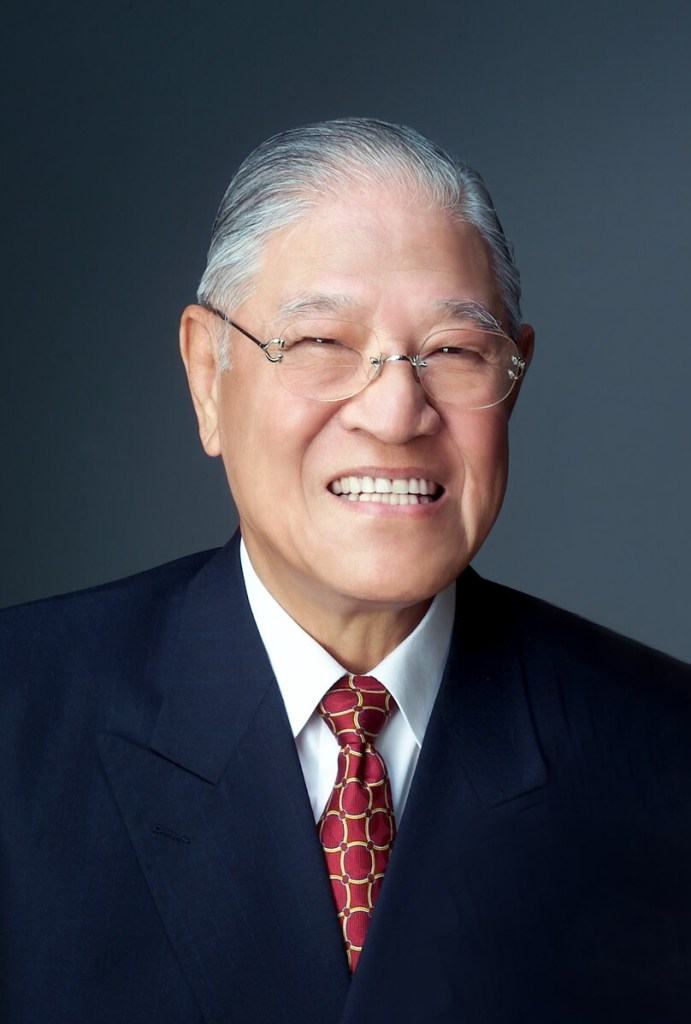
Later in 2003, the Legislative Yuan passed the Referendum Act, which provided a legal basis for citizens of Taiwan to vote directly on issues of both national and local significance.
In the following decades, Taiwan’s progress was challenged by ongoing geopolitical tensions and military posturing from China. This tension stemmed from the belief by the People’s Republic of China in the ‘One China’ principle, which asserts that Taiwan is not independent, and instead part of China.
Because of this, Beijing has long sought reunification with Taiwan, but public opinion in Taiwan, particularly since the 1990s, has favoured formal independence.
Unity in the face of uncertainty
Taiwan’s current president Lai Ching-te, in a first speech marking the National Day of the Republic of China, the official name for Taiwan, spoke of the resilience and bravery of the Taiwanese people. ‘The Republic of China has shown steadfast resolve, and all along, the people of Taiwan have shown unwavering tenacity.’ He adds that his duty as president is to ensure his nation ‘endures and progresses, to unite the 23 million people of Taiwan.’
Later in his address, he emphasised that Taiwan is resolved in its commitment to ‘upholding peace and stability in the Taiwan Strait and achieving global security and prosperity.’
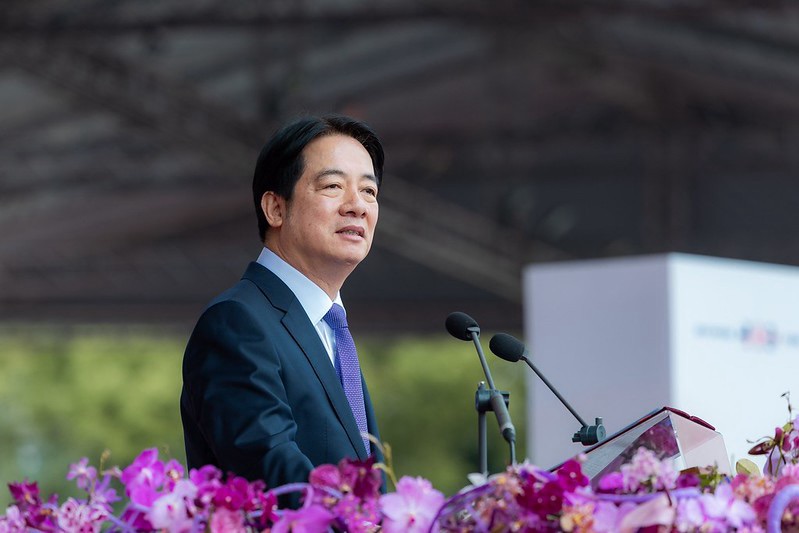
He declared that Taiwan was willing to work with China, to address climate change, combat infectious diseases, and maintain national security to ‘pursue peace and mutual prosperity for the wellbeing of the people on the two sides of the Taiwan Strait,’ highlighting cooperation while implicitly reinforcing the distinction between China and Taiwan.
Further, Lai remarked on the current geopolitical clashes including the war between Russia and Ukraine, and shared hopes that China would ‘live up to expectations of the international community, that it will influence and work with other countries toward ending Russia’s invasion’, as well as aid to calm tensions in the Middle East. Importantly, he expressed hope that China would ‘take up its international responsibilities, and along with Taiwan, contribute to peace, security, and prosperity of the region and globe.’
Beijing’s continued stance
At the recent Foreign Ministry Spokesperson Lin Jian’s Regular Press Conference, a journalist from news organisation AFP referenced a visit by Lai Ching-te to Kinmen, where he said in a speech that he ‘would not yield an inch of ground in defence of Taiwanese territory.’ The reporter then asked for the Ministry’s comment on Lai’s visit and his remarks.
Lin Jian declared that ‘Taiwan is part of China’s territory. No matter what the Democratic Progressive Party [of which Lai Ching-te is chairperson], authorities say or do. The fact that both sides of the Taiwan Strait belong to one and the same China will not change, and the historic trend that the two sides of the Strait will and must be reunified, will never be reversed.’
Later on at the press event, another journalist from Shenzhen TV referenced an upcoming trip by the head of Taiwan’s foreign affairs office, Lin Chia-lung to visit Guatemala’s President Bernardo Arévalo. Lin Jian’s response again echoed PRC’s One China policy. He claimed that Taiwan having ‘diplomatic ties’ with countries was a form of ‘political manipulation’ and that the ‘Taiwanese independence agenda will lead nowhere.’
The PRC belief that Taiwan is a territory of China that will be reunified is unlikely to change anytime soon, and it continues to cause tension with countries that do not recognise Beijing’s claim.
Military drills and cable cuts
Recently, Taiwan condemned China for provocative behaviour after it conducted ‘shooting’ drills off Taiwan’s southwest coast. This is one of many rounds of military drills that have increased over the past three years.
The Taiwan Ministry of National Defence stated that on 26th February 2025, the People’s Liberation Army, the military arm of the Chinese Communist Party, had flown 32 aircraft near Taiwan, 22 of which had ‘crossed the median line of the Taiwan Strait and entered Taiwan’s northern and southwestern Air Defence Identification Zones (ADIZ), in conducting air-sea joint training with People’s Liberation Army Navy PLAN vessels.’
It added that the PLA had ‘blatantly violated international norms by unilaterally designating a drill zone 40 nautical miles off the coast of Kaohsiung and Pingtung, claiming to conduct live-fire exercises without prior warning.’
Both Kaohsiung and Pingtung host important air and naval bases, as well as major southwestern population centres, with Kaohsiung being Taiwan’s largest port.
A day before, on 25th February, Taiwan’s coast guard said that it had detained a China-linked cargo ship after a nearby undersea cable to the Penghu Islands in the Taiwan Strait had been disconnected.
‘All eight crew members are Chinese nationals and [we] do not rule out the possibility of the Chinese activity of grey-zone harassment,’ the coast guard said in a statement.
Chinese military response
The Chinese Ministry of National Defense held one of its regular press conferences with Senior Colonel Wu Qian, Director of the Information Bureau of the Ministry of National Defense in which he responded to journalists.
He said that the Democratic Progressive Party, Taiwan’s dominant party led by Lai Ching-te, is ‘overestimating its own capabilities and extremely dangerous.’ He then gave a direct warning to the DPP: ‘Trying to stop a chariot with a mantis arm will only lead to your own destruction. Sooner or later, I will come and take you away.’
He concluded the press conference with a final reinforcement of the sentiment: ‘We will come and get you sooner or later.’
It is unclear exactly how this threat will be carried out, but as military drills ramp up, it won’t be difficult to guess how things might pan out for Taiwan if the rest of the world does not act to prevent further escalation.
 Equinox News
Leave a comment