
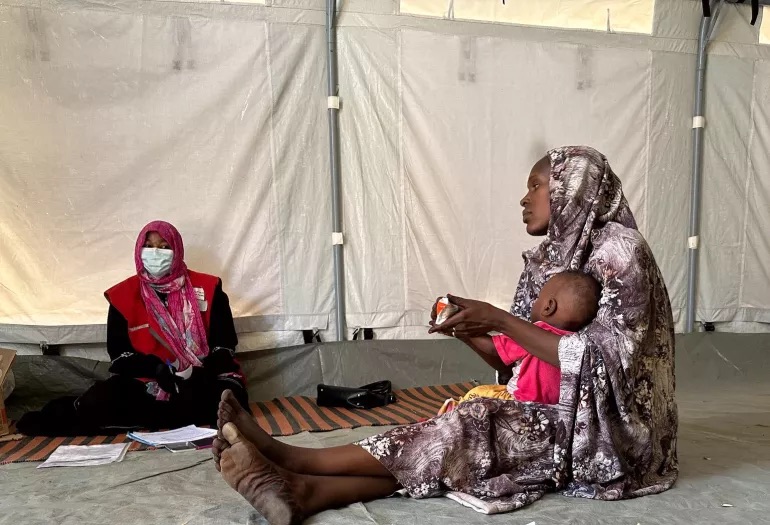
Famine has hit conflict-stricken Sudan as the country deals with ongoing clashes between the Sudanese Armed Forces and the Rapid Support Forces.
Since the conflict began in April 2023, almost 13 million people have been displaced according to the United Nations High Commissioner for Refugees (UNHCR).
The Office for the Coordination of Humanitarian Affairs (OCHA) has warned that there are escalating humanitarian needs which are driven by disease, hunger, insecurity, flooding, and displacement.
In El Fasher, North Darfur, reports have indicated that shelling continues with civilians being the most impacted due to clashes between armed groups.
According to the Integrated Food Security Phase Classification (IPC), El Fasher and the Nuba Mountains in South-Central Sudan are facing extreme food shortages, with very low access to basic services.
Further, the European Civil Protection and Humanitarian Aid Operations has said that children in the region are bearing the brunt of the crisis, with nearly 4 million children under the age of 5 suffering from acute malnutrition, and more than 770,000 children with severe acute malnutrition are at risk of dying from starvation.
Community kitchens were set up by local groups but many have ceased functioning due to constant clashes, and the World Food Programme (WFP) has said local reports indicate that some families are resorting to consuming animal fodder and food waste for survival.
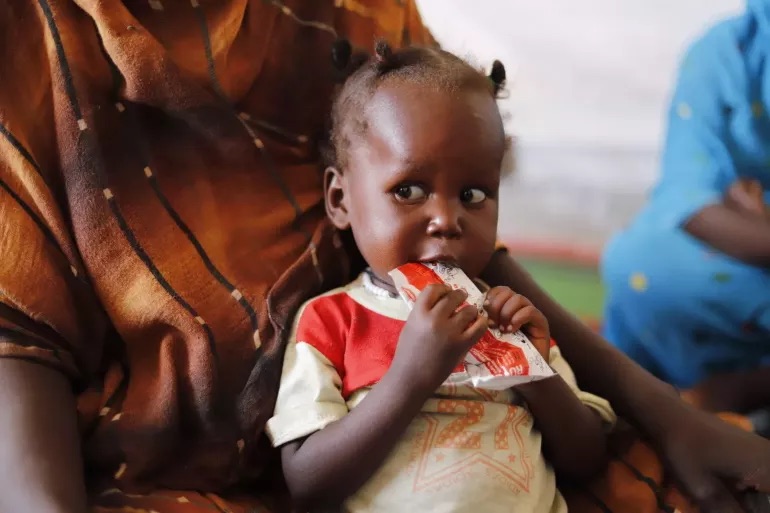
Those who have managed to flee to neighbouring countries have also cited an escalation of violence and sexual assault, including incidents involving young children and infants.
UNICEF has said that gender-based violence service providers in Sudan have revealed that children, including infants as young as one have been subjected to 221 cases of rape since the beginning of 2024, by armed men.
It warned that this figure is only a ‘partial picture of the true magnitude of violence inflicted against children.’
These atrocities were carried out in various instances including during invasions of cities, during the trafficking of people across the country, when carrying out daily activities of living such as fetching water and other tasks, as well as other instances.
The following excerpt contains a graphic testimony of sexual violence against children.
‘After nine at night, someone opens the door, carrying a whip, selects one of the girls, and takes her to another room. I could hear the little girl crying and screaming. They were raping her. Every time they raped her, this girl would come back covered in blood. She is still just a young child.’
Omnia, an adult female survivor held with other women and girls by armed men, in testimony originally published in a report by UNICEF
Women and girls are the ‘most affected’ by the ongoing crises in the country, according to UN Women.
‘Displaced women and girls can be subject to the risks of exploitation and abuse, especially during the delivery of aid, where protection mechanisms are weak or absent in some locations,’ said Salvator Nkurunziza, UN Women’s representative in Sudan.
Sudan is also grappling with cholera outbreaks which have intensified across Africa due to an ongoing rainy season.
In an effort to curb public health risks, UN humanitarian partners as well as local authorities have launched sanitation campaigns targeting 11,000 people in El Fasher and other regions to prevent further outbreaks at overcrowded sites.
 Equinox News
Leave a comment